Where We’ve Been and Where We’re Going

The Food Rescue Partnership has officially been around for three years. We have a great group of active stakeholders dedicated to food rescue but towards the middle of last year, we reached a crossroads. We gained some traction after the workshop in October 2015 and our research showed two avenues that had real needs in the community – outreach and transportation as well as education and awareness.

But where should our emphasis be placed? And what could we realistically accomplish? With those questions in mind, we embarked on a Strategic Planning Process that began last fall. With the help of our stakeholders, we started with a SWOT (strengths, weaknesses, opportunities, threats) analysis to get firsthand input on the current strengths and weaknesses, as well as where our focuses should be for the future.

With those results in hand and many discussions looking at the pros versus the cons as well as what we wanted to accomplish versus what was realistic for us to accomplish, we are ready to share the outcomes of the planning process and where we are heading for the future.

New Revised Mission Statement

Multiple variations were discussed to result in the revisions of the FRP mission statement. We wanted to ensure the mission was direct but still broad enough that it could lead us into future efforts of food recovery.

The Food Rescue Partnership is a Quad Cities coalition that promotes rescuing food for its best possible use.

Development of a Vision Statement

The vision statement is really based on the initial concept of the FRP when the Scott County Health Department created it – reducing food waste.

Quad Cities – a community dedicated to eliminating food waste.

Creation of Core Value Statements

Five core values will be used as the FRP moves forward to achieving its goals.

  • Collaboration – Facilitate active partnerships to increase food rescue.
  • Communication – Practice and maintain clear communication with all in order to connect and educate.
  • Community – Cultivate a continually growing group of partners effectively engaged in food rescue.
  • Resourcefulness – Innovate to adapt proactively and develop solutions to ensure the best use of stakeholders’ resources.
  • Safety – Prioritize safety for our donors, recipients, and volunteers during the entire food rescue process.

Goals

No strategic plan is complete without goals and next steps. To keep things simple and moving forward, the FRP decided on two overarching goals with numerous action steps within each goal.

  1. Form and maintain eight new partnerships per fiscal year between community stakeholders to rescue food for its best possible use.
    • This really looks at the core of the coalition – establishing relationships. Connecting recipient agencies and donors and providing the information needed to ensure food is used for its possible use.
  2. Provide monthly food rescue education and awareness to the community at-large.
    • With a focus on building and maintaining the FRP foundation, the second goal the FRP is actively educating and providing awareness throughout the community.

The strategic planning process could not have been completed without the hard work of the many stakeholder organizations that provided their time and input into setting the course for the future. As we continue to move forward, we’ll keep everyone updated on our progress. The best places to stay updated are to like us on Facebook or get involved and become a stakeholder!
“Share the Love – Starting a Food Rescue Program in Your Community” Webinar

WebinarLogosWe are excited to be joining Eat Greater Des Moines and Table to Table in an upcoming webinar focused on food rescue and community efforts!

Each organization has had a different start and a different process to food rescue. Through the “Share the Love – Starting a Food Rescue Program in Your Community” webinar, you’ll learn:

  • Three different models addressing food rescue in Iowa communities
  • Federal laws in place to protect food donors
  • Resources available to start a food rescue program in your community

Each group will share how they got started, lessons learned, and resources available to other groups looking to replicate efforts in their community.

Download the webinar flyer here or click below to register for the webinar!


Date: Wednesday, August 31st
Time: 1:00 – 2:30 pm (CST)
Registration
After registering, you will receive a confirmation email containing information about joining the webinar.

Inaugural Member in Food Rescue: Outback Steakhouse

We are excited to announce the first approved Member in Food Rescue of the Donor Recognition Program is none other than Outback Steakhouse in Davenport, IA. The proprietor, Lindsey Adams, has been leading the donation process since it began in December 2014. “Some people don’t know when or where they’ll get their next meal and we hope this partnership can help,” she says. Since the process started in 2004, King’s Harvest, also in Davenport, has been picking up food twice a week from Outback Steakhouse.

Outback Steakhouse becomes inaugural Member in Food Rescue
From right to left: Pete Vogel (Food Rescue Partnership), Alex Danekas (Outback Steakhouse), Lindsey Adams (Outback Steakhouse), Erin Traeger (Outback Steakhouse), Jeffrey Ratliff-Crain (Food Rescue Partnership, Augustana College)

Earlier this month, Food Rescue Partnership board chair, Pete Vogel and one of the FRP stakeholders from Augustana College, Jeffrey Ratliff-Crain, officially recognized Outback Steakhouse as the inaugural Member in Food Rescue.

“The work you have been doing at Outback in the area of food rescue has been overlooked for far too long in our community,” says Vogel. Adams was presented with a certificate showcasing Outback Steakhouse as a Member in Food Rescue, as well as window clings that you’ll likely see the next time you stop by the restaurant!

Adams has been with Outback Steakhouse since 2003, originally working throughout the Chicago region in a variety of roles. Then in September 2013 she made the Quad Cities home becoming owner of the Kimberley Road restaurant. For those of you familiar with the Food Rescue Partnership, you may recognize her name as she is also the vice-chair of the FRP board and was one of the panelists at the FRP workshop last October.

In talking with Lindsey, she mentioned she isn’t looking for recognition or award which is easy to believe, however, I would like to point out that her efforts in food rescue have resulted in both. Through donating food consistently, the Davenport restaurant was recently recognized as the #2 establishment in terms of food donation. And overall for the year, they are ranked #7 out of over 600 establishments. She views food donation as a no-brainer, something that is just a part of the everyday routine at Outback Steakhouse.

Excess food is stored in the freezer until King's Harvest volunteers arrive for bi-weekly pick-ups.
Excess food is stored in the freezer until King’s Harvest volunteers arrive for bi-weekly pick-ups.

And the routine has become just that, a routine. Any excess food that can be donated is stored in bins in the freezer. This primarily includes honey wheat bread, mashed potatoes, soups, produce, and sometimes even prime rib and sirloin. In addition to excess food, other items such as the onion tops from the Bloomin’ Onions are included in the regular donations as well.

Before pick up, the food is weighed and tracked on the Harvest Food Donation Log provided by the corporate office before being picked up by the King’s Harvest volunteers. From the paper donation log, the information is then tracked online through the Food Donation Connection which holds all of the restaurant’s donation information. As of July 2016, their donations for the year had already surpassed 3,600 meals.

The FRP is pleased to kick off the Donor Recognition Program with Outback Steakhouse. Adams and her team are well deserving of recognition for their dedication to ensure food is provided to people through their relationship with King’s Harvest. Congratulations to the Davenport Outback Steakhouse staff. Keep up the great work!


Learn more about the Donor Recognition Program and sign up here!

Help Augustana Become the Next Campus Kitchen

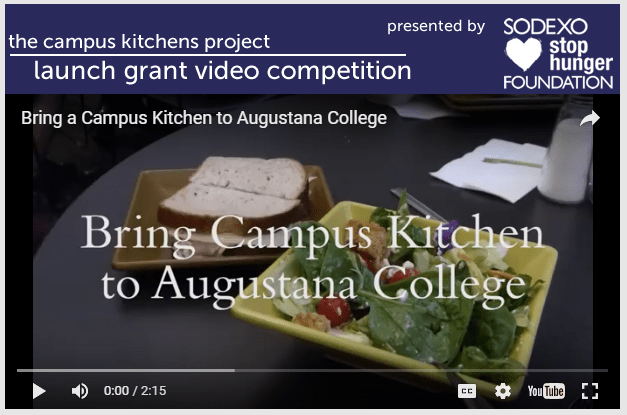
The Campus Kitchens Project has been helping universities and schools set up campus kitchens in big schools as well as small, rural and urban, colleges and high schools through student-powered hunger relief efforts. In fact, there are 51 Campus Kitchens throughout the country and Augustana College in Rock Island wants to become the next.

Augustana is currently competing with three other schools to receive a $5,000 grant. It will be the only one within almost 200 miles. Each school is able to tailor its Campus Kitchen to the specific needs of the campus and community using the following four components:

  1. Food recovery
  2. Meal preparation
  3. Meal delivery
  4. Empowerment and education

Voting is open from May 2-9 and you can vote once every 24 hours per device. Click below to go to Augustana’s page, watch the video and click the vote button below the video.

Augustana has helped out the QC Food Rescue Partnership so much, let’s do the same for Augustana!

Augustana_Video
Click to visit Augustana’s page on the Next Campus Kitchen Competition


Sneak Peek: How Donation Can Work Panel at the Food Rescue Workshop

Do you work at or manage a food establishment or retail food store? Do you want to donate food instead of throwing it away but don’t know where to start? Not sure where to take the food or what is needed? If you answered yes to either of those questions, you will not want to miss the second panel at the October 20 Food Rescue Workshop.

The Food Rescue Partnership has brought together five individuals from both sides of the donation spectrum. Lindsey Adams (Outback Steakhouse) and Melissa Freidhof-Rodgers (Ross’ Restaurant) will be sharing information from the donation side. Both managers of their respective restaurants, Adams and Freidhof-Rodgers will share information about how to get started, developing policies and procedures and address usual assumptions, such as concerns about liability in donating food that could make someone sick. (Hint: There’s no need for concern. We’ll cover that at the workshop.)

On the recipient agency side, the Food Rescue Partnership is welcoming Mary Fahrion (Kings Harvest), Dan Huber (Sacred Heart Cathedral) and Lauri Jones (Café on Vine). They will highlight information about establishing relationships, what food safety rules need to be met, and how the tax donation works.

And remember, this is just a sneak peek into what will be covered through this panel. These panelists will have much more to share, and a Q&A section will take place for any unanswered questions.

This panel, as well as the networking opportunities that will take place throughout the day, are great opportunities to begin a relationship with a recipient agency and get started on donating food.